- Performance
Do not go gentle into that good night
As the world unravels, activism is seeing a resurgence, at times sincere and decisive, at others a well-intentioned but empty shell. With this intervention, Dries Verhoeven examines the aesthetics of resistance. Can an artistic expression spark genuine change, or has protest become a toothless ritual? Do we still believe in the impact of our actions, or are we succumbing to despondency in the face of political and social gridlock?
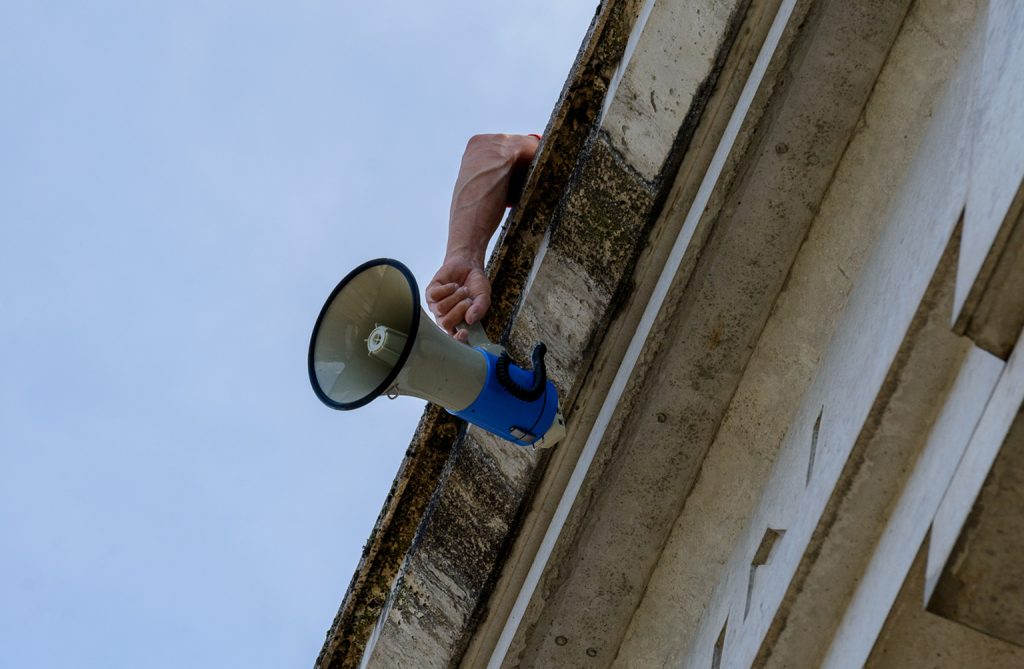
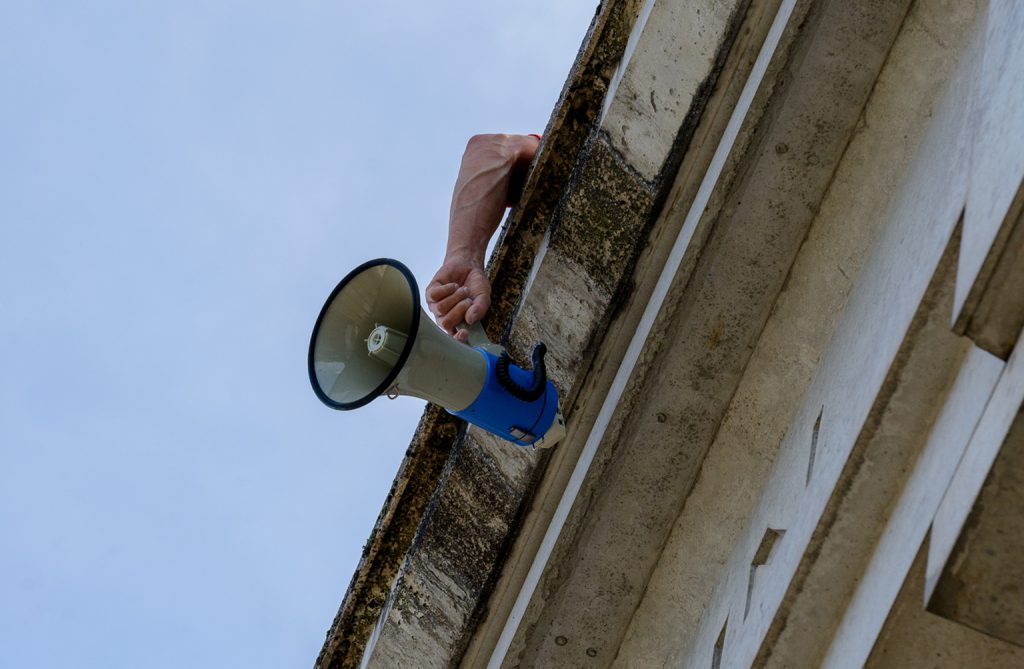
On the rooftop of Stadsschouwburg Utrecht, a single arm extends over the edge of the building, a cast of Dries Verhoeven’s own. A megaphone, held firmly in its hand, blasts a voice into the street, shouting a reading of Dylan Thomas’s ‘Do not go gentle into that good night’. For eight hours straight, the delivery shifts between defiance, urgency, and exhaustion.
This temporary public intervention stages a relentless call to resistance in a moment when political and ecological collapse shapes daily reality. Passersby encounter the work unexpectedly, a disembodied voice hovering over the street, inviting them to consider what forms of defiance remain meaningful in an age of cynicism and fatigue.
“Can we, as artists, truly act against dictatorial regimes, tech billionaires, and warmongers responsible for genocide?” asks Verhoeven. “At times, I find the idea rather preposterous. Aren’t we compromised by the very systems in which we move? The political stance in the arts is not only necessary, but also rather fashionable these days, sometimes becoming almost gratuitous. Do such gestures really challenge tyranny, or do they merely comfort the cultural middle class? And what about the value of ambiguity? Can art be an effective medium of resistance?”
Do not go gentle into that good night is both a performance and an object—a piercing intervention that probes the tension between activism and spectacle, protest and poetry, conviction and doubt.
Share
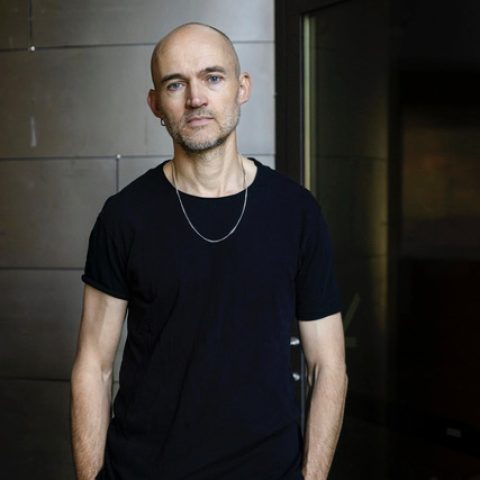
Dries Verhoeven
Credits
text naar ‘Do not go gentle into that good night’ – Dylan Thomas
dramaturgy Miguel A. Melgares, Hellan Godee
technique Roel Evenhuis
production Ellen van Bunnik (’n More)